Gallery
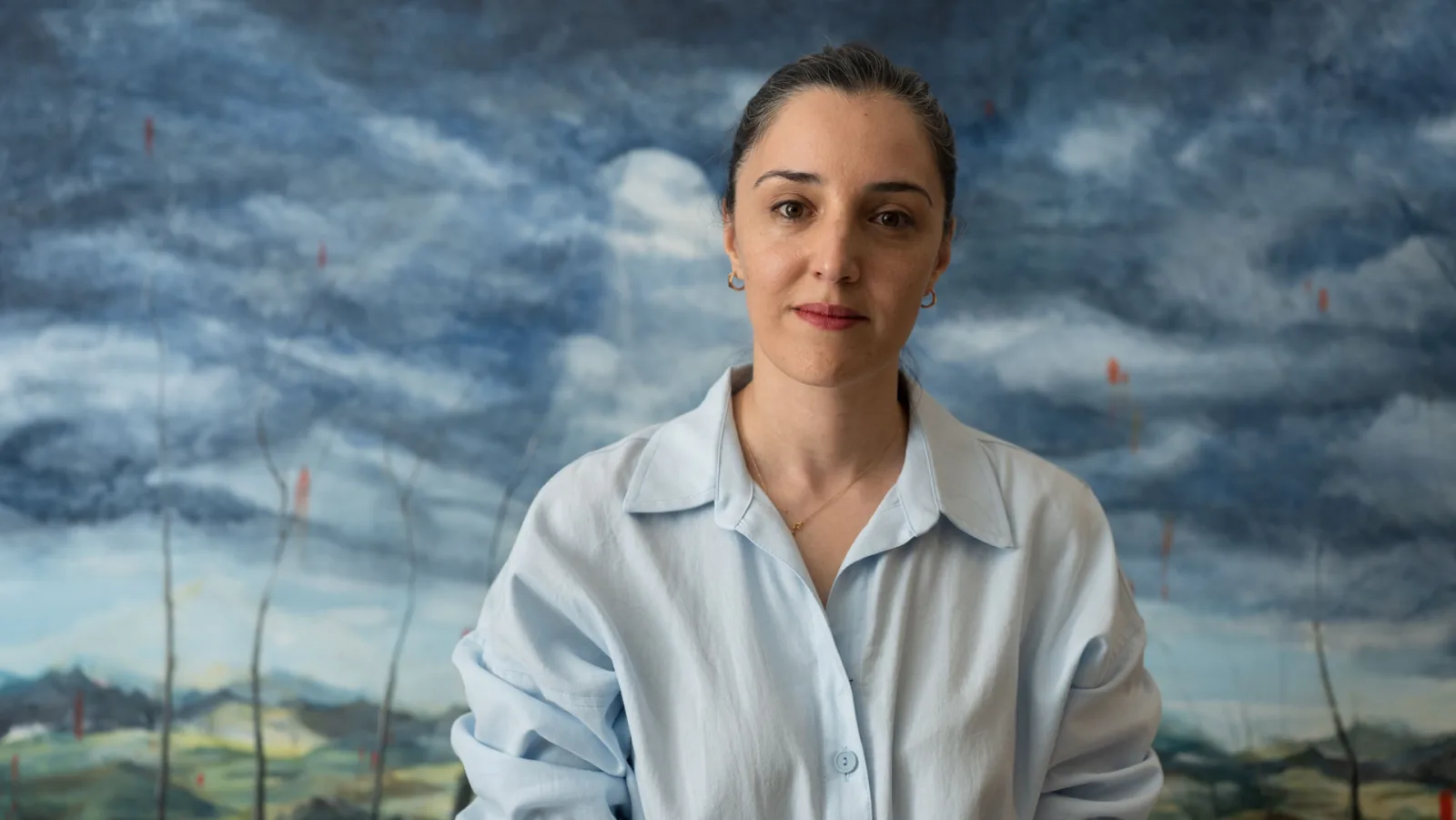
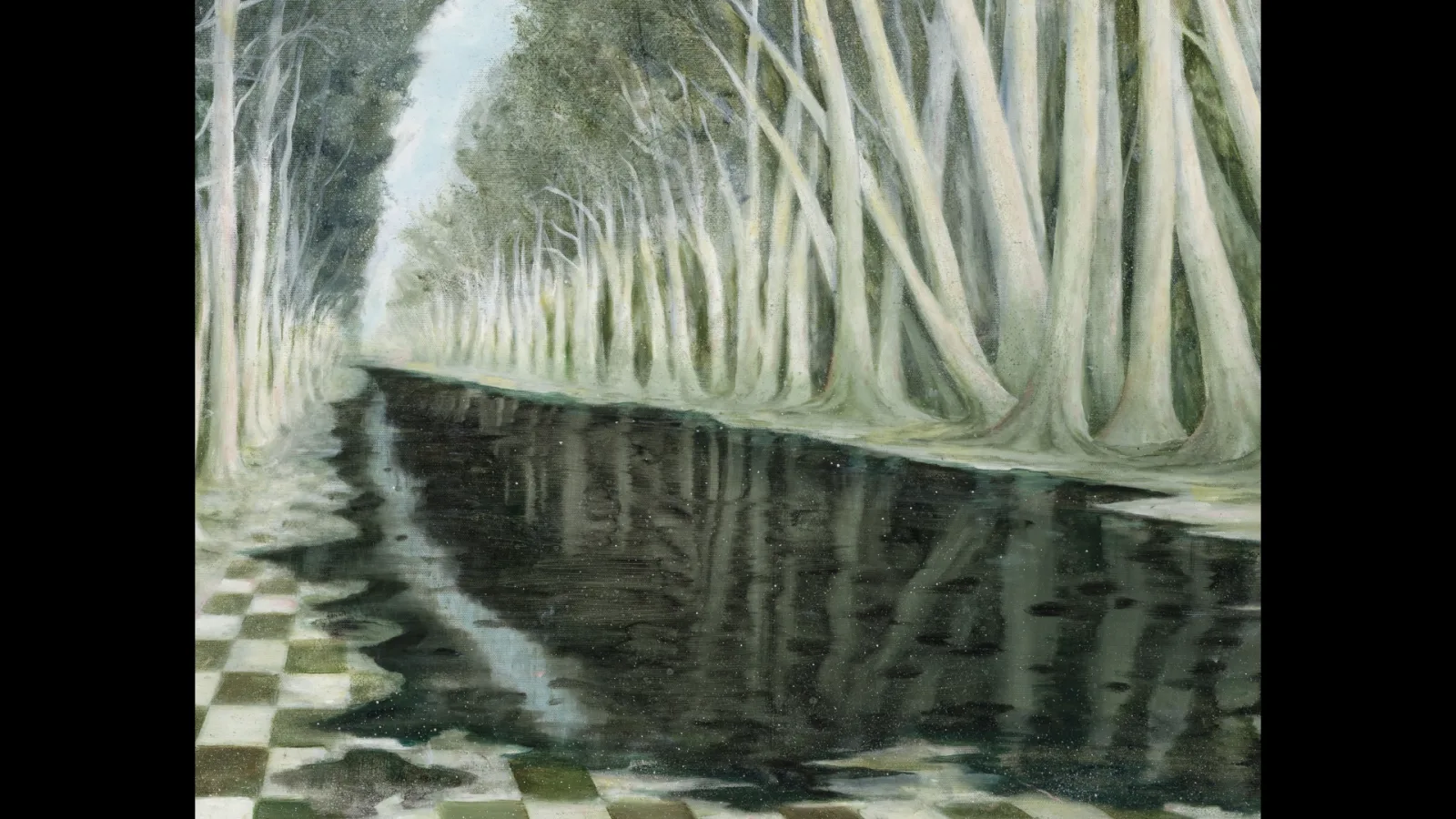
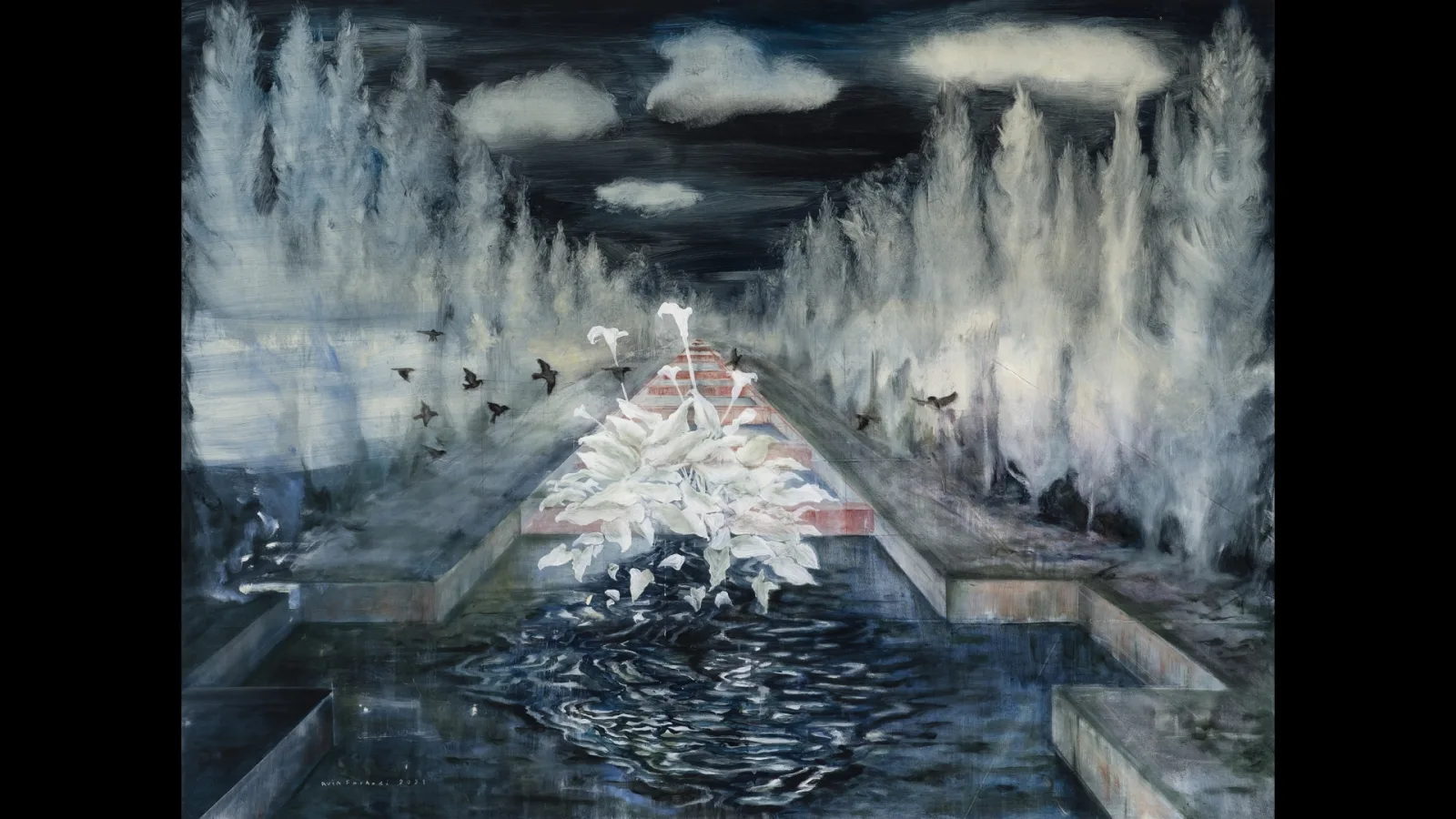
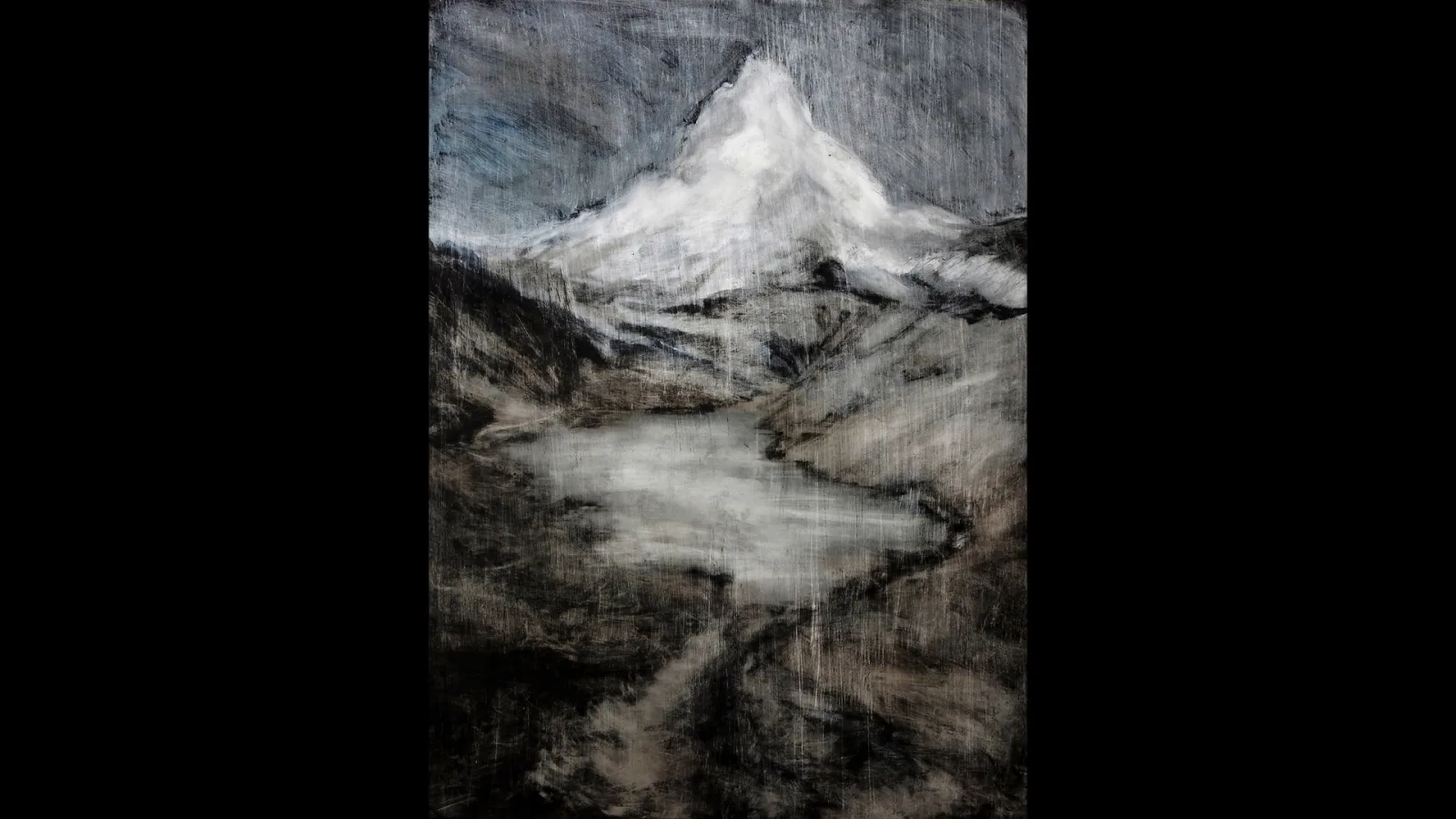
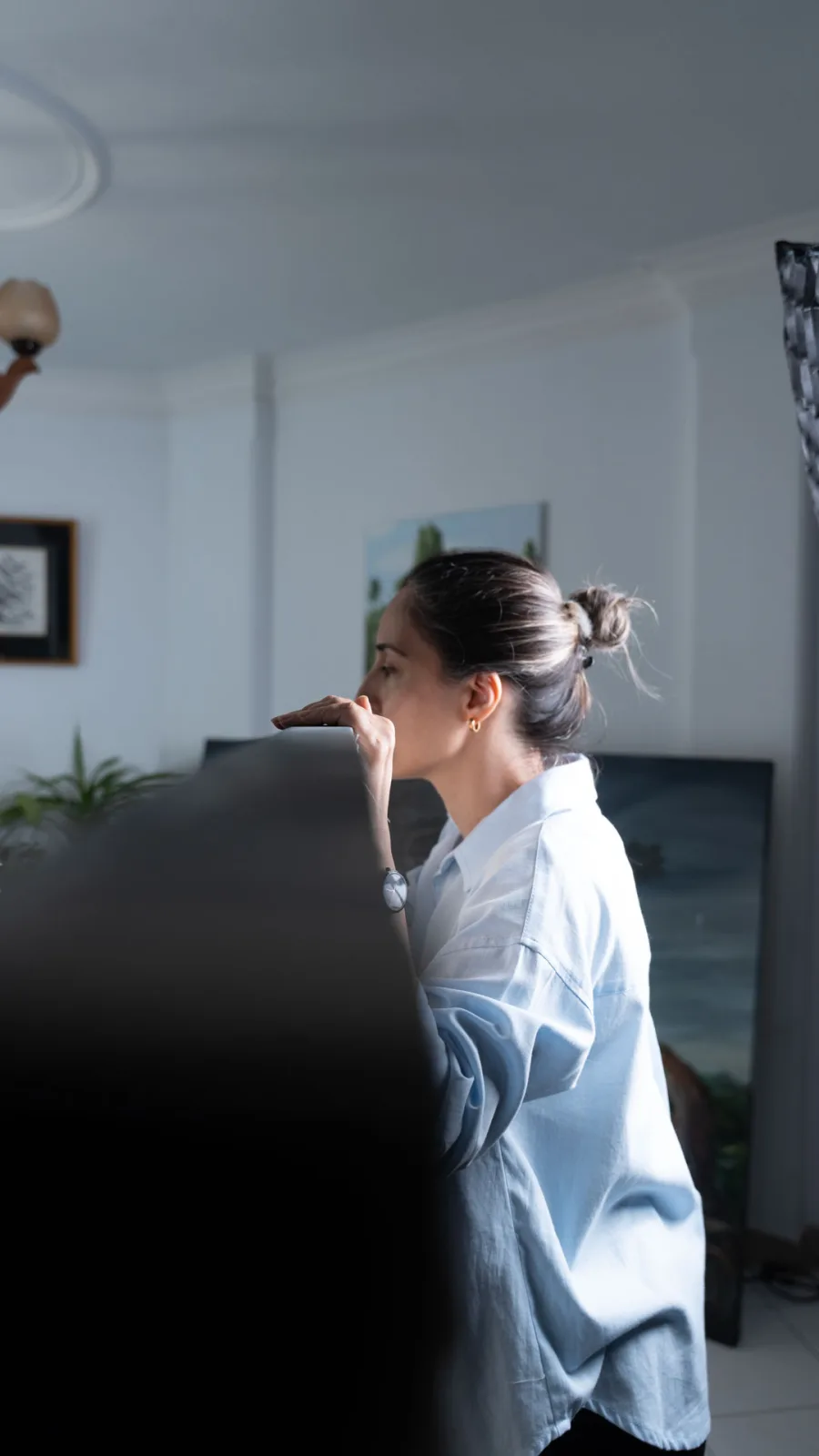
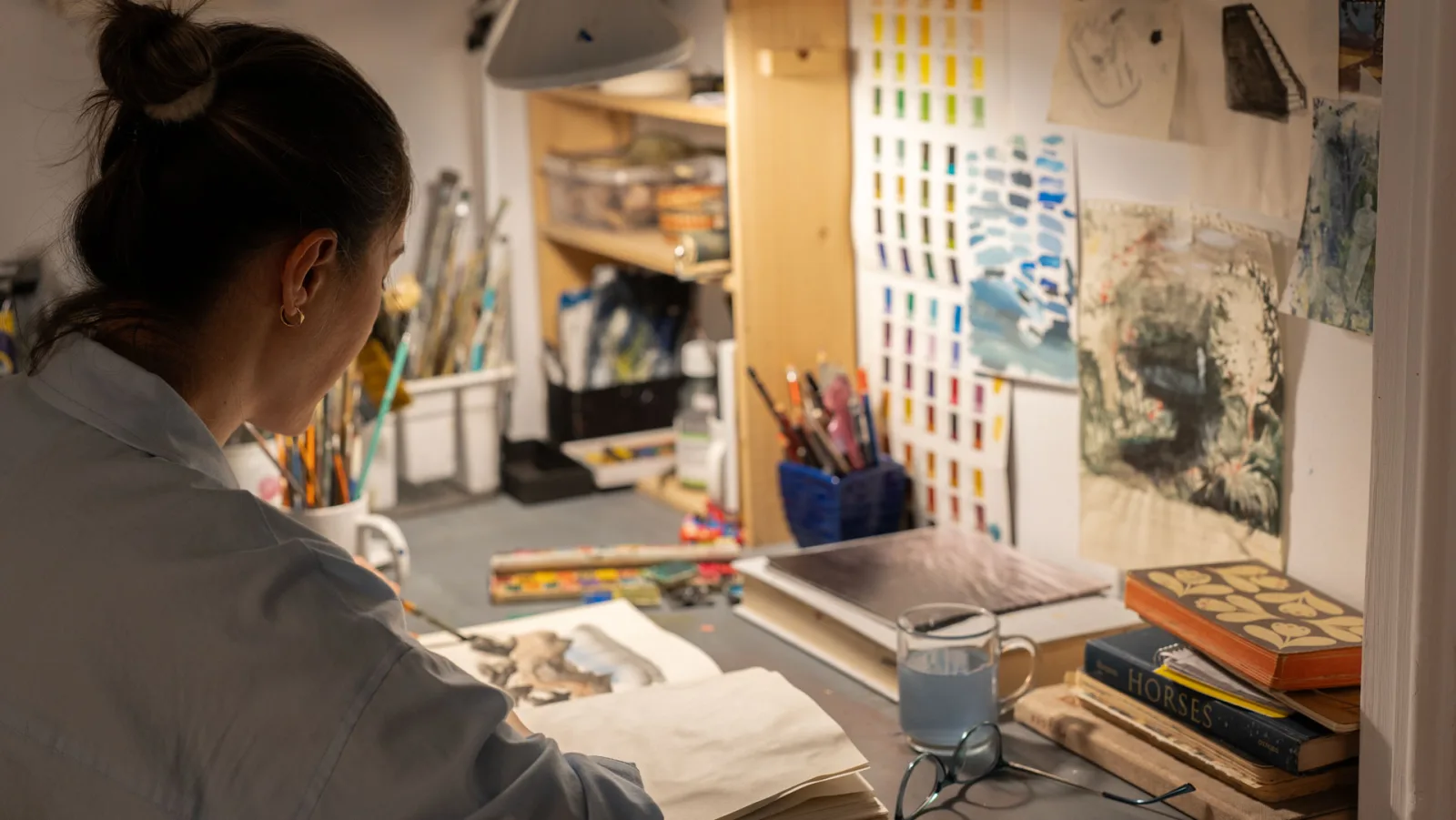
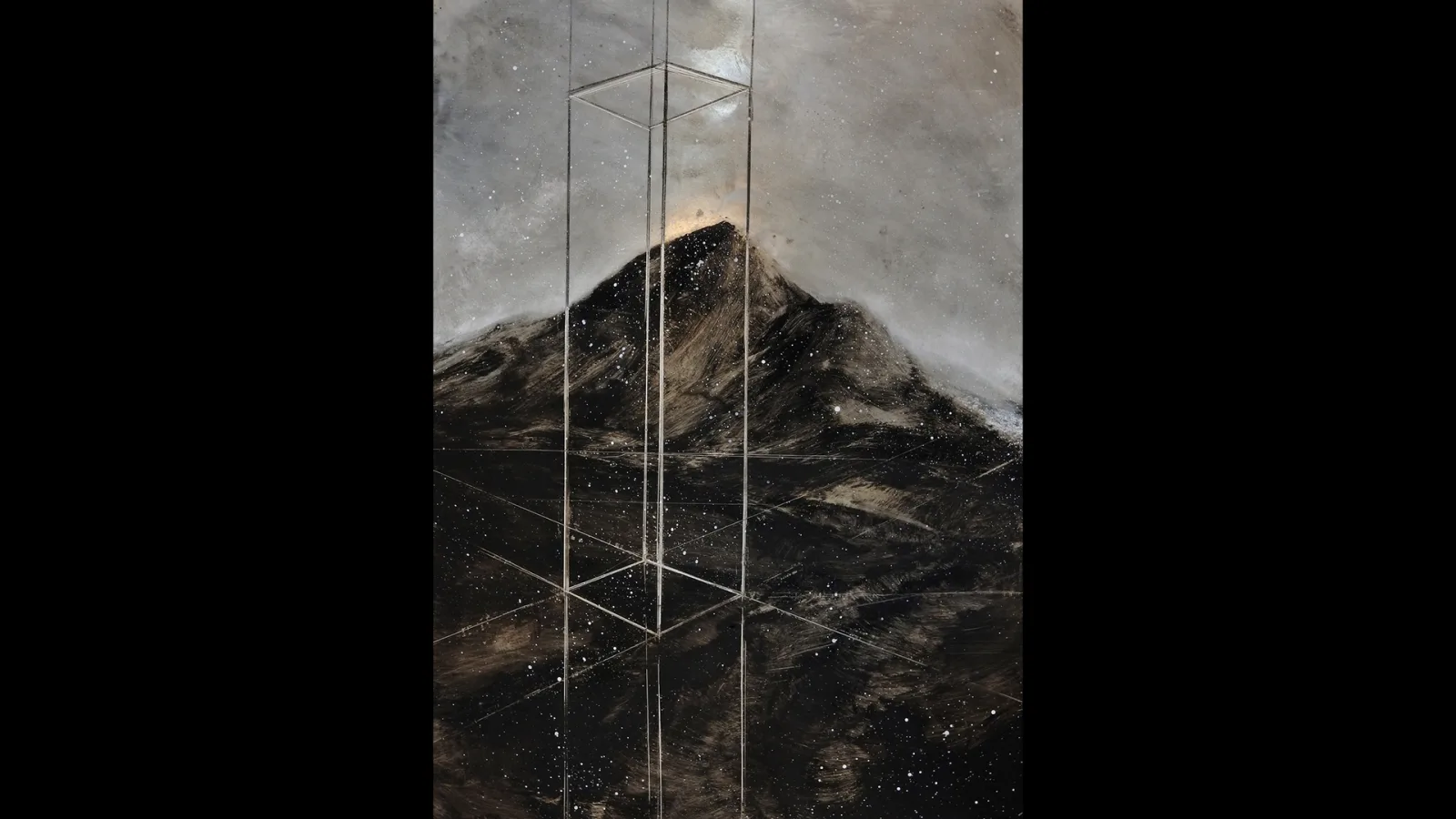
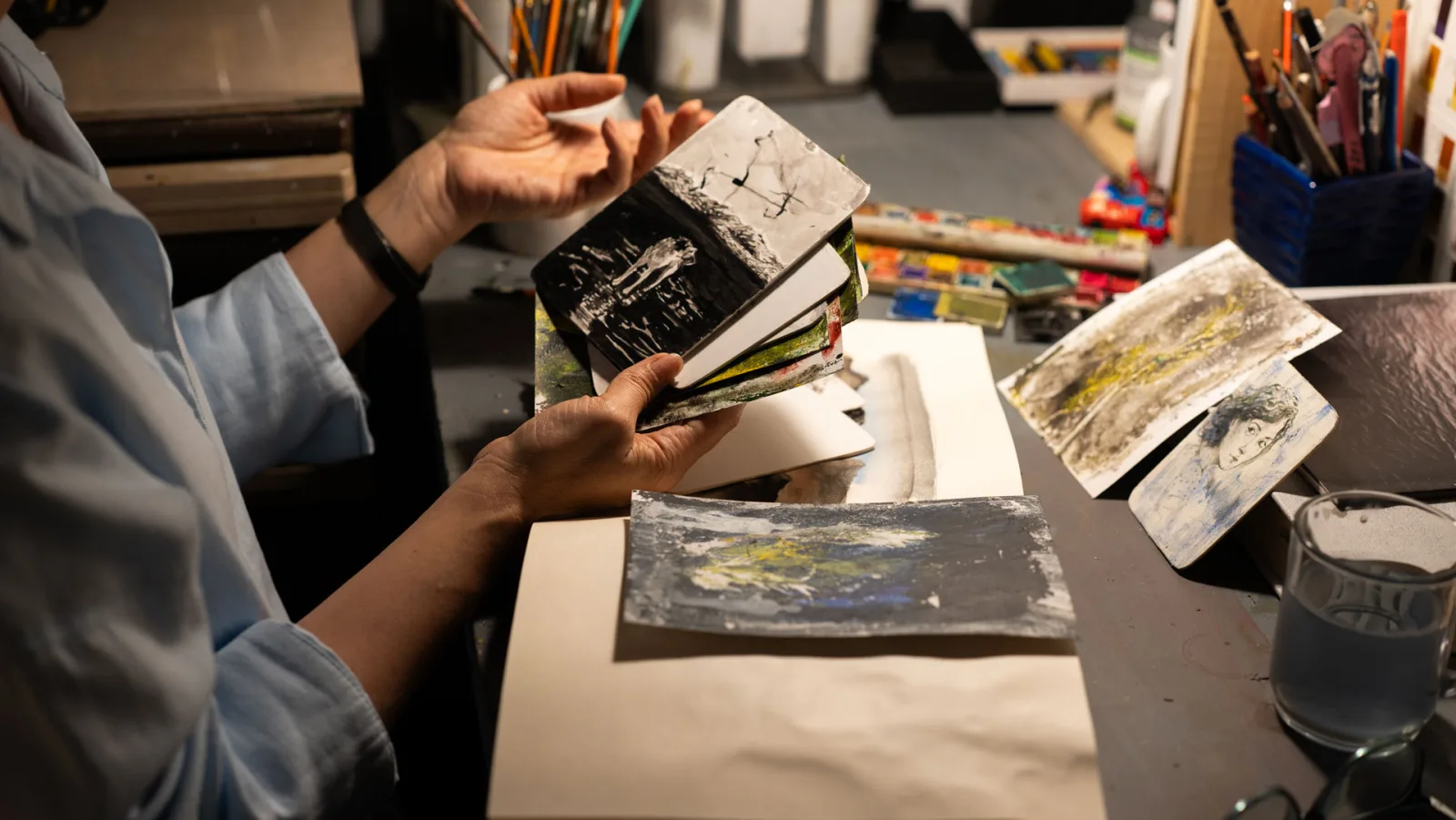
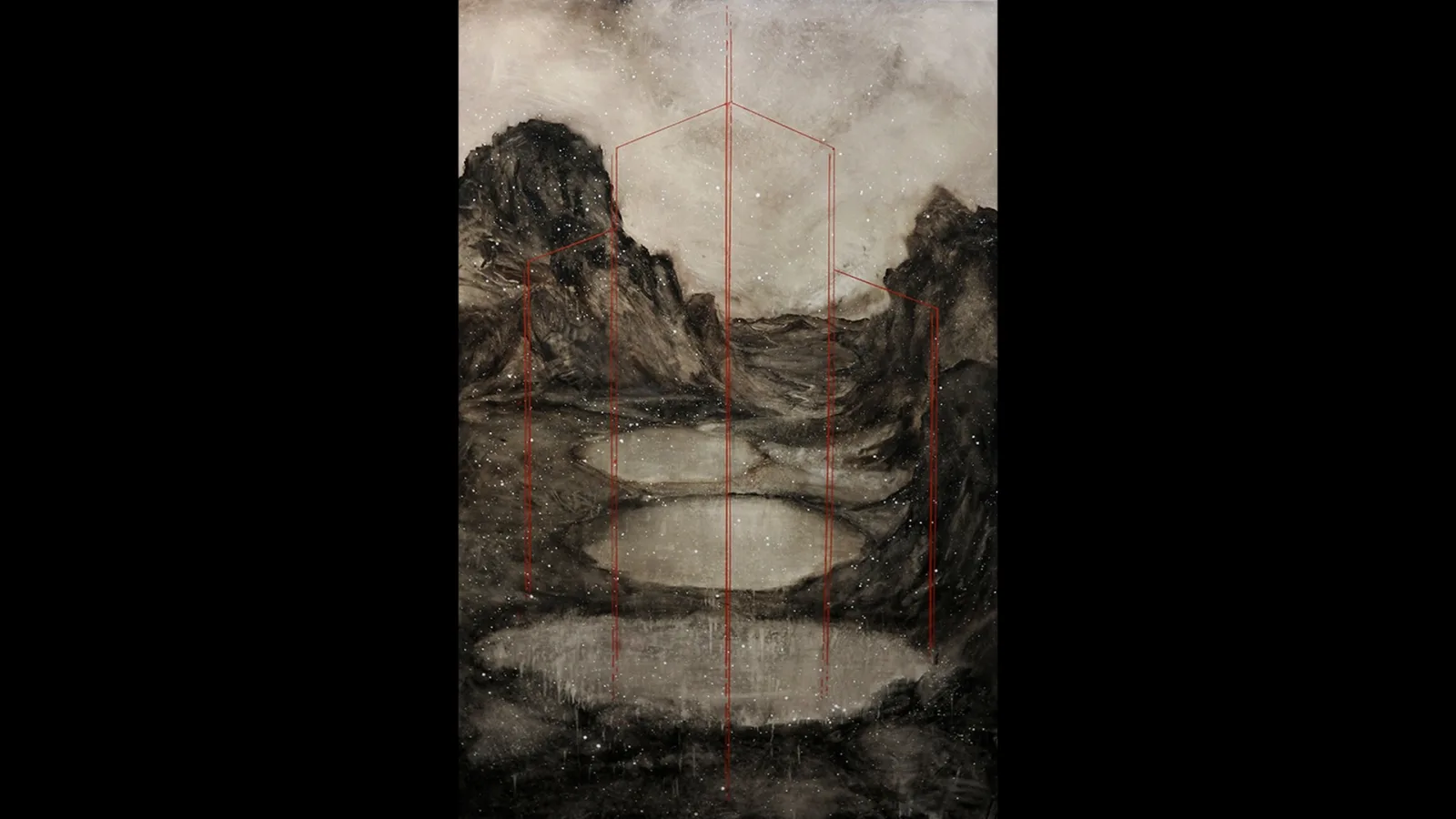
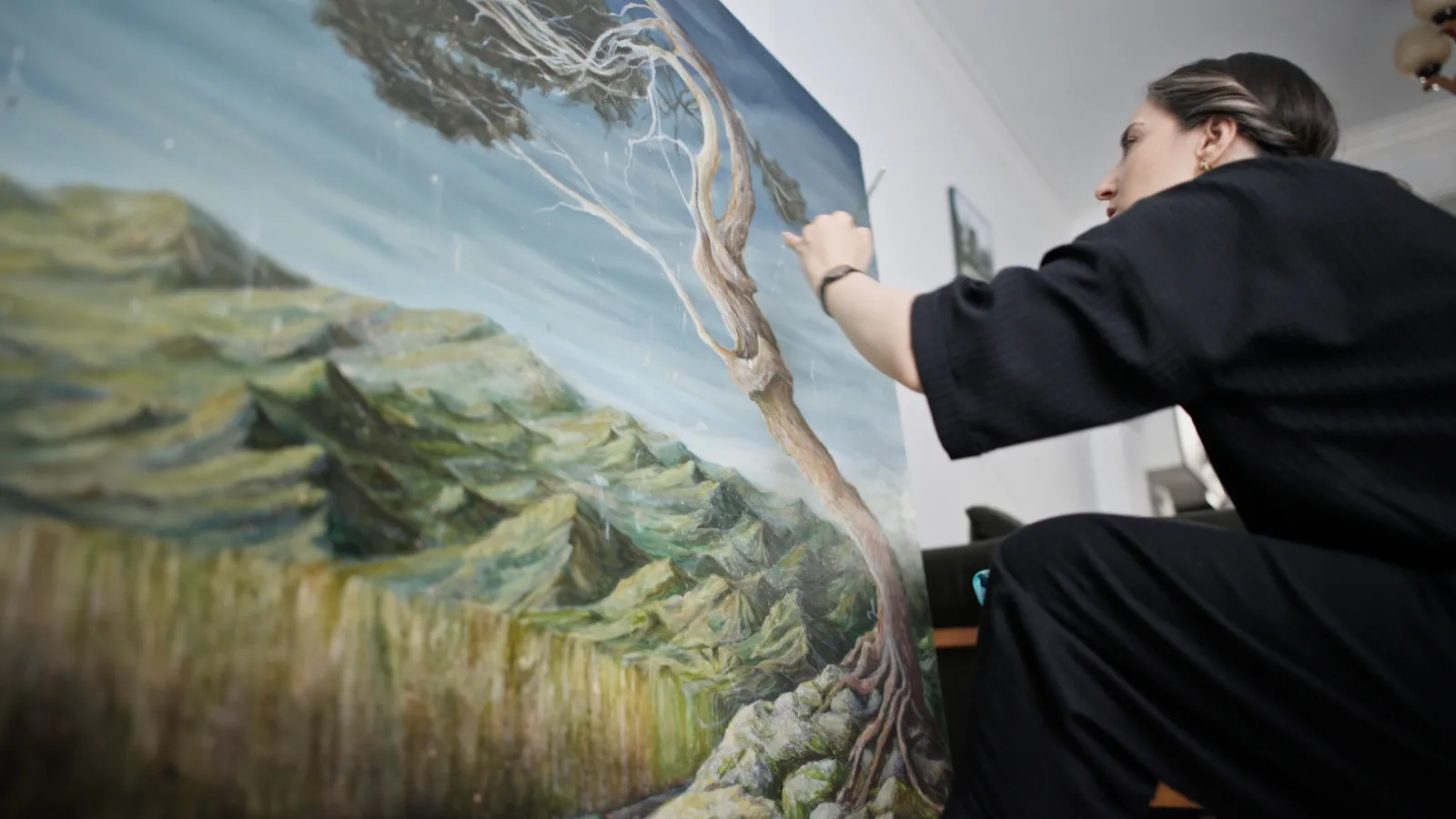
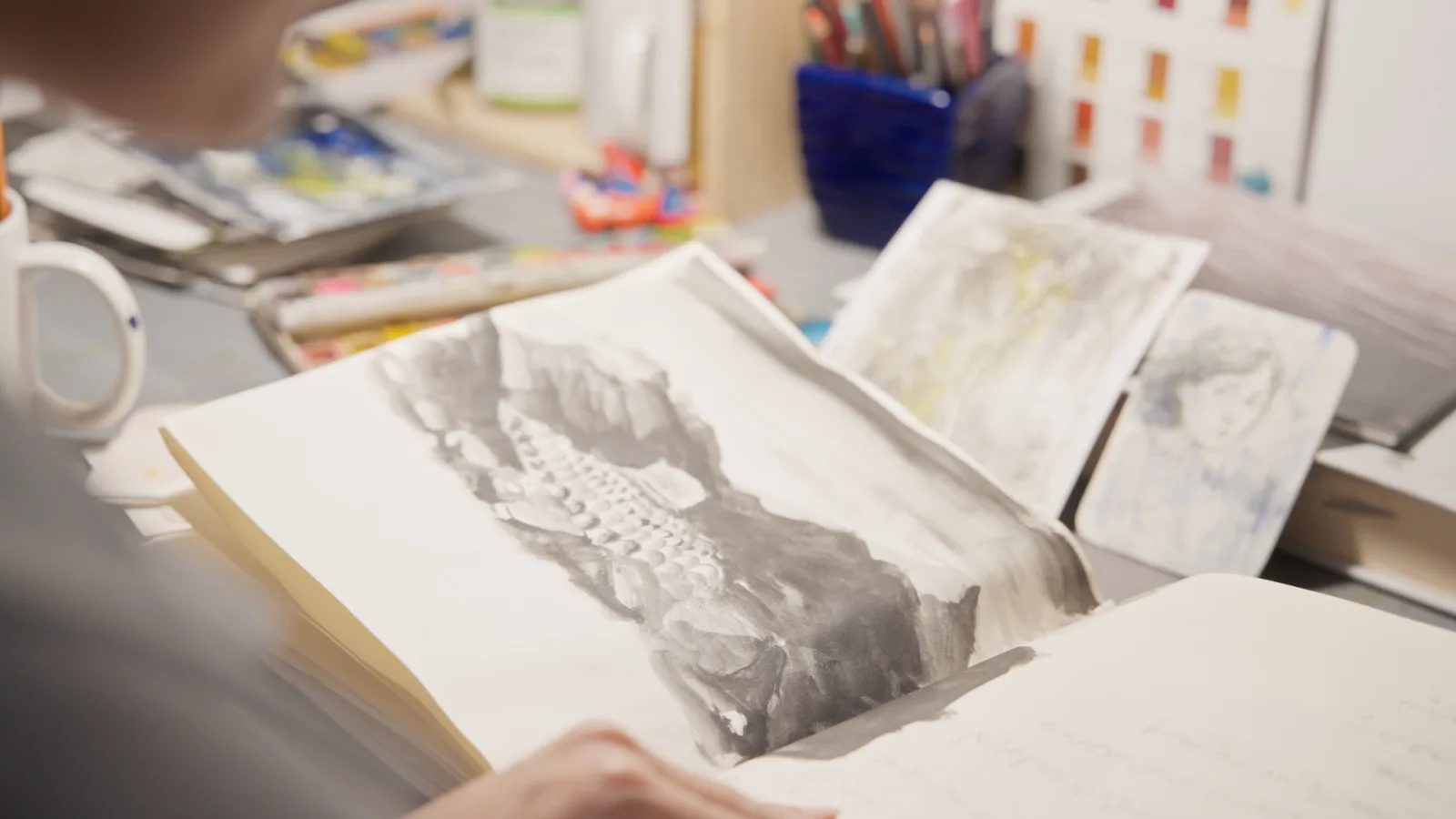
Avin Farhadi paints right in the middle of life — a landscape painter who alters her scenes until they speak, leaving a hole where loss lives.
Avin Farhadi paints from the middle of life — quiet, longing, unfinished.
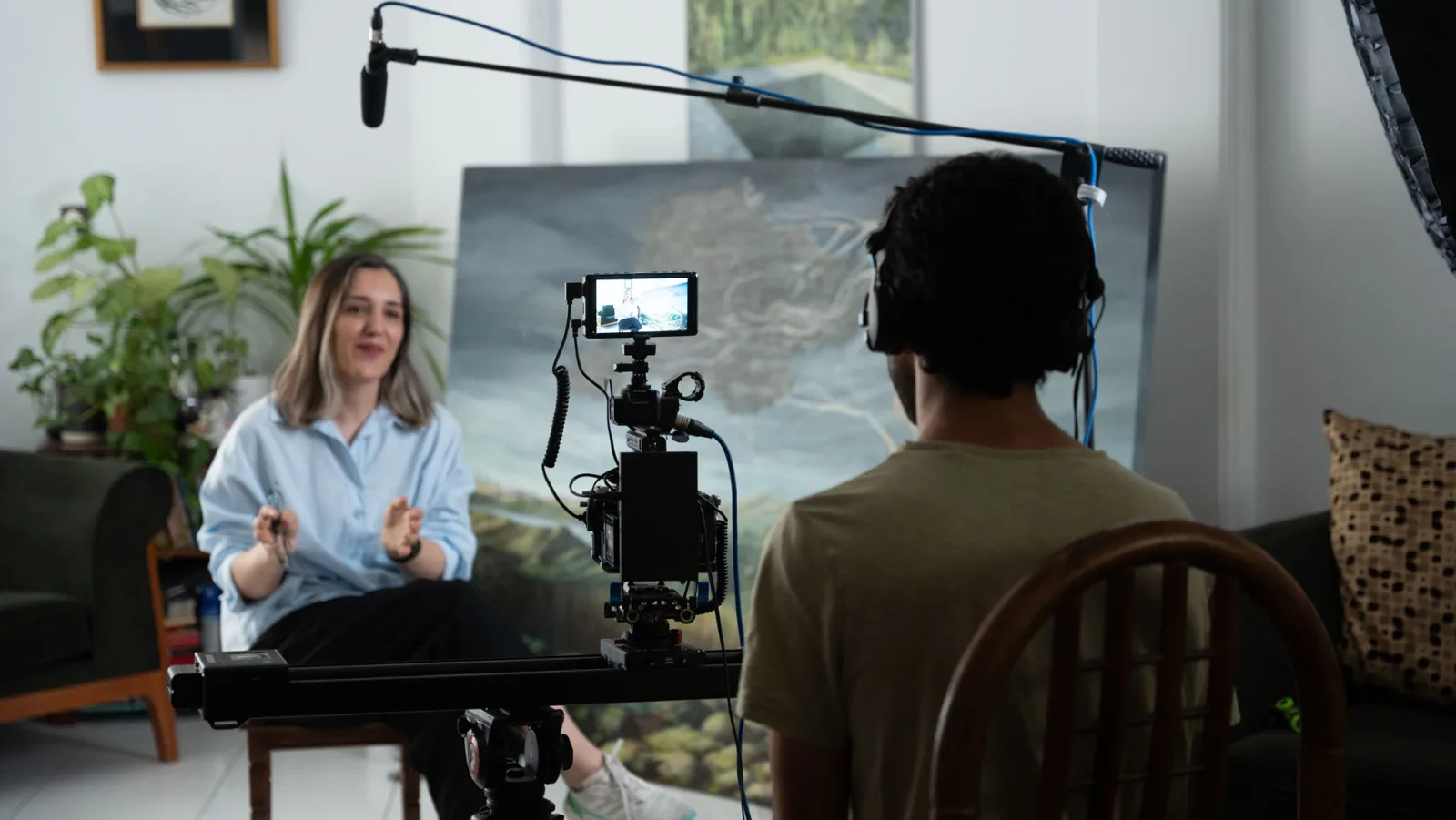
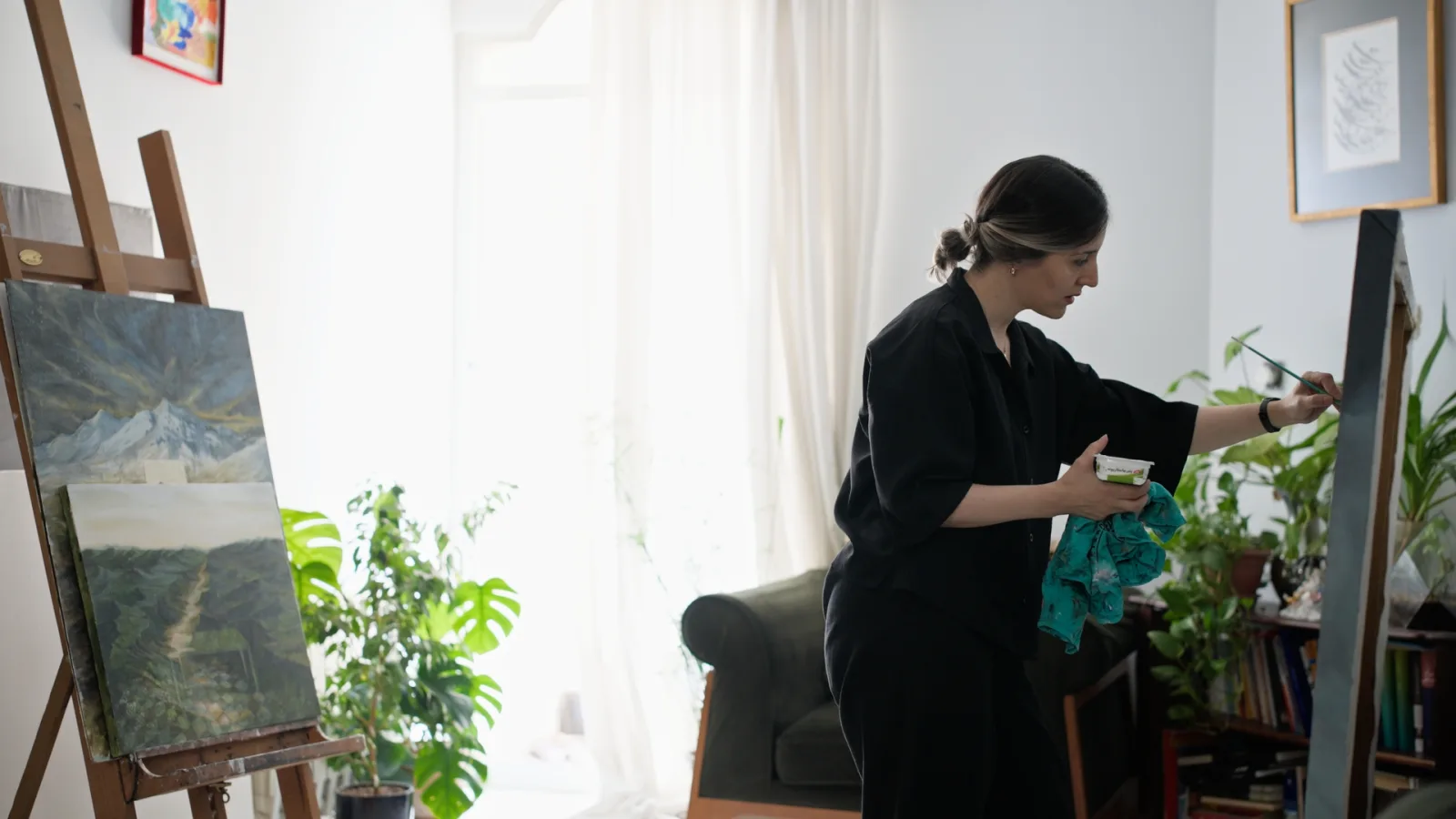
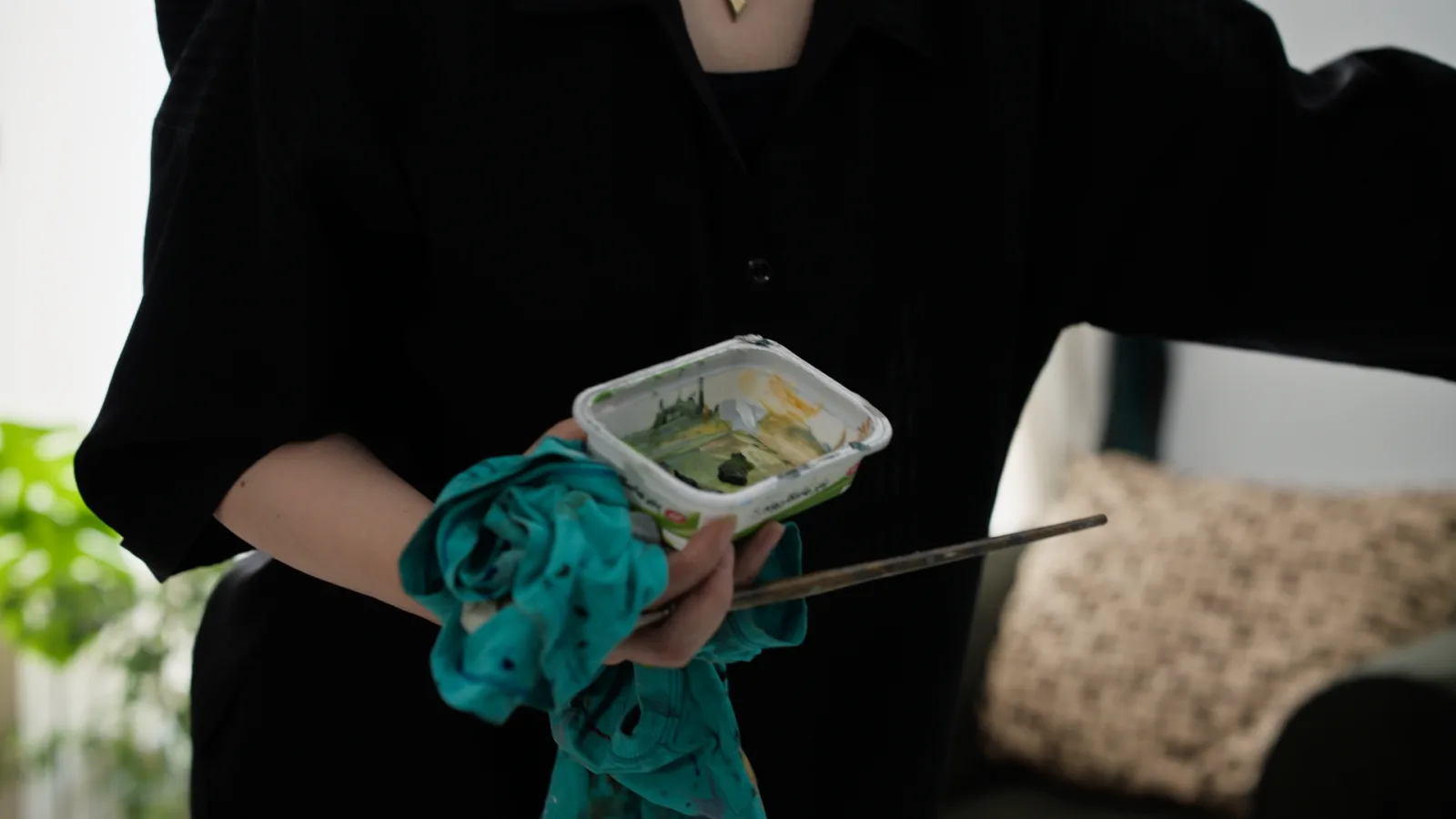
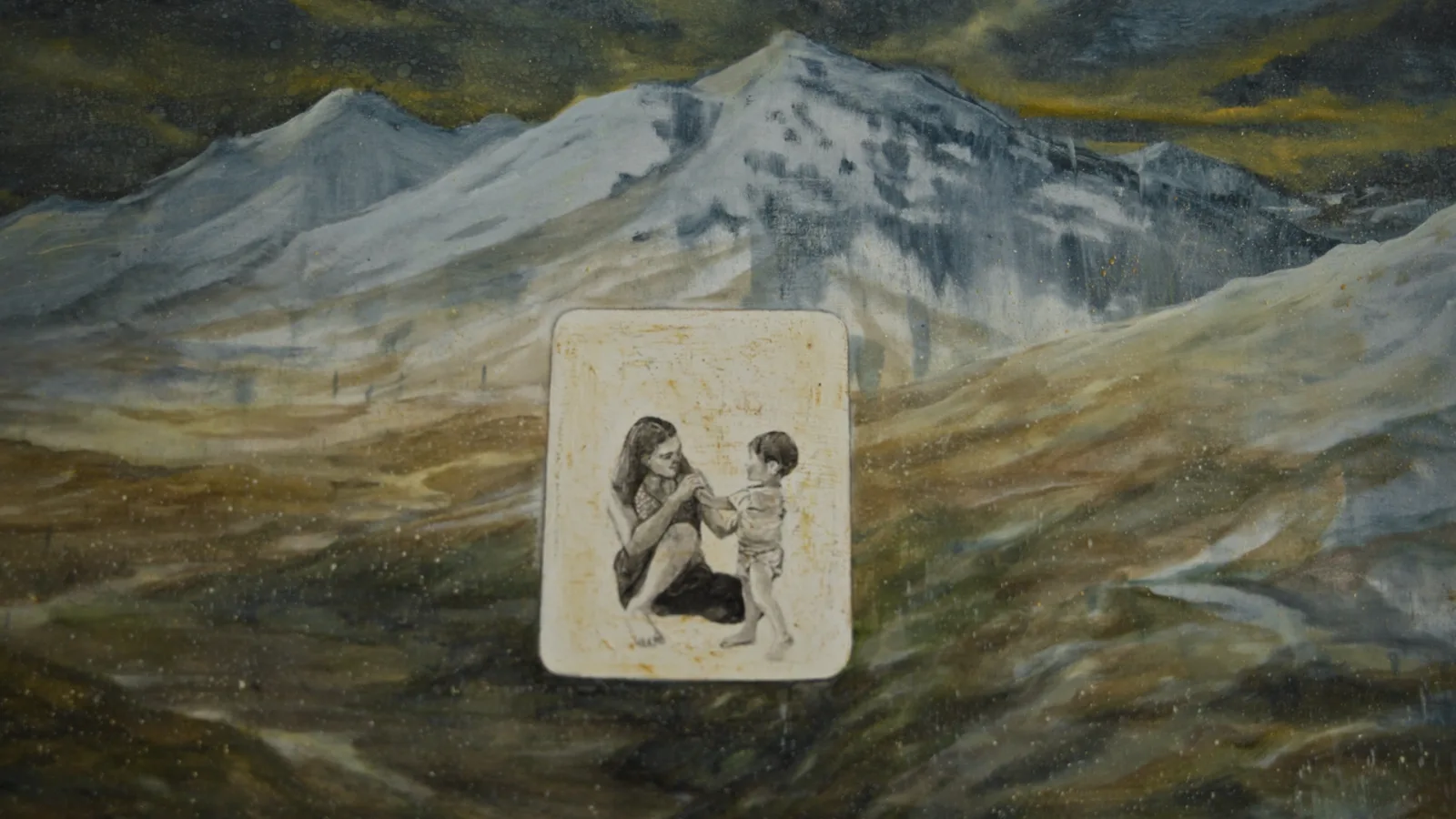
Avin Farhadi is a painter who works, quite literally, in the middle of life. There is no fixed studio she leaves and returns to; she rolls up the rug at home, unfolds the piece she set aside, works for an hour, then half-closes it "like a large seed" until tomorrow. Born in Isfahan — a city she left a decade ago and keeps finding excuses to return to — she absorbed the habit of painting outdoors, in the open and on the move, and it was travel that first brought landscape into her work. Her landscapes begin in the tradition of scene-painting, where everything sits logically in its place — and then she does something to make the image speak. She removes the pitched-roof house; she opens a hole in the ground. That hole became, for her, a symbol of loss, of subsidence, of being and not-being — a quietly philosophical absence. She is drawn to abandoned and deserted places, where the stories linger but the people are gone, and she refuses to paint the human figure directly: if she doesn't draw the human, she says, it is because she is one. What she wants instead is a trace — of people, of longing, of everything missing. A turning point came through her young son. When he was three he would reach into her work mid-stroke; rather than resist, she learned to accept it, handing him a pencil and paper alongside her own, and his marks — and the hope a child brings — gave her the color and the daring to work large. For Farhadi, creating is a lot like life itself: a battle with the work, full of energy given and taken, success and defeat. It is not something she does for economics, and she wouldn't wish an artist's hardship on her child — yet she deeply hopes her child will taste it, because this, more than anything, is what keeps her well and returns her to life.